

Hearing Wrap Up: Banning Natural Gas Increases Energy Costs for All
WASHINGTON—The Subcommittee on Economic Growth, Energy Policy, and Regulatory Affairs today held a hearing titled “No Flame, More Pain: How State and Local Bans on Natural Gas Increase Costs.” During the hearing, members underscored the advantages the United States holds over the rest of the world with our abundance of natural gas, reviewed how Democrats pursued policies to ban natural gas appliances and force electrification, and examined how blue cities and states have enacted and are pursuing laws which aim to eliminate the use of natural gas and other fossil fuels. Members also examined the ways these bans harm working households, small businesses, and communities, including by causing utility prices to skyrocket and straining U.S. electric grids.
Key Takeaways:
Natural gas is a low-cost, efficient fuel that powers households and businesses across the United States and allows consumers to have a variety of choices for their energy source.
- Michael Fazio, Executive Director of the New York State Builders Association, testifying on behalf of the National Association of Homebuilders (NAHB), testified that “Families should be able to choose the energy sources and appliances that work best for their homes and their budgets. Some may choose electricity; others may choose natural gas or propane. Those options should compete based upon cost, performance, reliability and what families actually want. That choice is being taken away.”
- Patrick McCormick, Former Chief Counsel for the U.S. Senate Committee on Energy and Natural Resources and Senior Fellow with the National Center for Energy Analytics, testified that “The home heating market illustrates the scale of the choice being displaced: in 2024, natural gas remained the principal space heating fuel for 47% of U.S. households. And as shown in my prepared testimonies, in 2025, manufacturers shipped more heat pumps than gas furnaces. But consider that, according to these data, manufacturers shipped 3.2 million new gas furnaces last year alone. Coercive electrification measures rest on an asserted energy transition. Energy systems are always changing, but they evolve slowly and are additive. In 2024, more than 75% of global energy came from hydrocarbon sources. That percentage has changed comparatively little over the last 30 years, despite massive intervention.”
Democrat state and local governments have enacted laws that aim to eliminate the use of natural gas and limit energy choices for consumers.
- Mr. Fazio also commented that “[In] my home state, New York became the first state in the country to prohibit natural gas and other fossil fuels. Most new buildings. As someone who represents the state’s home building industry, I see firsthand what that means for builders and home buyers in colder climates. Fully electrifying a new home can add more than $15,000 in construction costs for a family already struggling to afford a home. That can be the difference between qualifying for a mortgage and being priced out altogether.”
- James Conde, Partner at Boyden Gray PLLC, testifying on behalf of the Prime Mover Institute, testified that “The Air Districts in the South Coast and Bay Area of California have pioneered a new type of ban, now called a ‘zero emission standard for appliances.’ That applies to existing replacements. It’s not just affecting new buildings, because combusting gas inevitably involves some emissions. This is effectively the same as saying that appliances cannot use gas, which [the Energy Policy and Conservation Act] prohibits . . . These zero emissions bans are now being considered by dozens of state and local jurisdictions.”
- Mr. McCormick further noted that “Local and state bans are raising economic and non-economic costs [for] Americans, as shown in my prepared testimony and in Mr. Fazio’s remarks. At the same time, these measures are denying people the opportunity to install appliances and equipment of their own choice. And the fact is, such bans have near zero effect on global carbon dioxide and methane emissions, even though having such an effect is a major stated reason for their enactment. To be clear, when market driven, electrifying end uses previously fueled by combustion can deliver greater convenience and efficiency, among other benefits, it should and will occur. Electrification is happening naturally.”
Hypocritical Democrat politicians have pushed for natural gas usage bans that increase energy and housing costs, despite claiming to care about affordability.
- Mr. Fazio stated that “Our industry is on the front lines of an affordability crisis. Families are struggling to afford homes, and we simply are not building enough housing to meet that demand. Energy mandates that increase the cost of construction only make that problem worse for a family trying to qualify for a mortgage. Every dollar matters. NAHB estimates that just a $1,000 increase in the cost of a median new home would price approximately 156,000 families out of the market. That is why energy choice matters. NAHB supports improving energy efficiency. Today’s new homes are substantially more efficient than homes built in prior decades, and builders continue to incorporate new technologies and construction practices. When it comes to how a home is powered, government should not be picking winners and losers.”
- Mr. Conde stated that “In today’s network, American homeowners and businesses have a wide variety of choices in appliances. Americans generally choose whatever combination works best for them, and often, but not always, that means choosing natural gas. In recent years, however, governments at all levels have been pulling every policy lever to squash full choice. Start with the Biden Administration’s misuse of the 1975 Energy Policy and Conservation Act, or EPCA. EPCA authorizes the Department of Energy to set energy efficiency standards for most household and many industrial appliances. In recent years, however, the Department of Energy has misused this old law to push electrification by, as the chairman put it, making gas appliances less useful and more expensive.”
- Mr. McCormick commented that “Natural gas bans, zero emission building mandates, burden people with low incomes, especially those who live where the weather is cold. They restrict customer choice, they distort competition, and, as has been mentioned, they transfer additional demand to electric systems that are already facing rapid load growth and reliability challenges. And in most cases, pardon me, in many cases they result in more natural gas being burned at electric generating plants than is reduced through end use.”
Member Highlights:
Subcommittee Chairman Eric Burlison (R-Mo.) inquired about the impact of natural gas bans on the nationwide housing crisis and the affordability of homes.
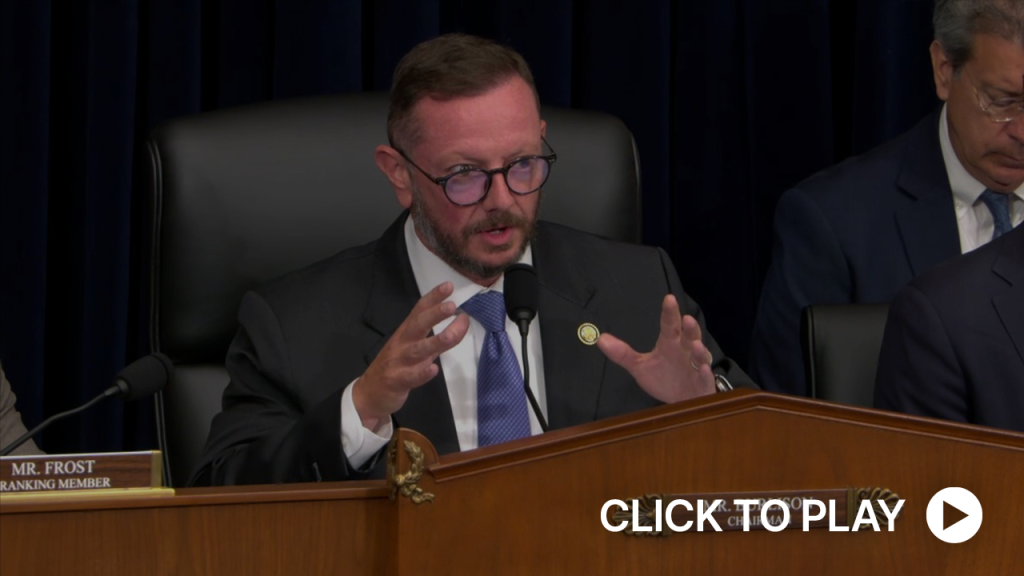
Subcommittee Chairman Burlison: “Mr. Fazio, could you explain to those of us who don’t build homes for a living, who don’t actually have to write the checks, actually figure out how to make something affordable, can you explain what some of these well intended, idealistic ideas what their impact really is on the cost of homes?”
Mr. Fazio: “Sure. NAHB has done a study that says it’s $15,000 more to build a new home, all electric, which you said in your opening statement, but we’re seeing gas bans pop up all over the country–New York, Maryland, DC, Denver, Georgia. Even now, and which will ultimately increase demand and increase electricity prices, which is a domino effect [that will cause] all electric homes [to become] more expensive to build and operate and more expensive for the consumer to buy. But I think more broadly and more importantly, we’re forgetting the cost. Now we’re talking about…we build subdivisions, we build communities, we don’t build high rise buildings in the middle of the city. We build suburban, rural.”
Subcommittee Chairman Burlison: “The American Dream.”
Mr. Fazio: “The American Dream for working families. So, the cost to get the power for an all-electric community from the power substation, through the lines, through the transformers. I mean, it can be hundreds of thousand of dollars. It could be millions of dollars to get the proper capacity to the site. That is extremely expensive. Also, in the home itself, you’re talking about many times having the electric panel go from 200 to 400 amps, not to get technical for an electric home. And also, in addition to the cost of getting that upgraded power from the substation to the transformer to the site may be miles, the lead times we’ve been quoted from utilities in New York are 18 to 24 months that those are killers for these projects. These projects, they won’t pencil out. They don’t get built. They cause uncertainty to the investors and the banks and the lenders to these homebuilders. So, the uncertainty of this all is really troubling. And we simply don’t have the capacity in New York and around the country.”
Rep. Gary Palmer (R-Ala.) asked whether the United States is dependent on China for energy and whether natural gas use decreases our dependency on China.
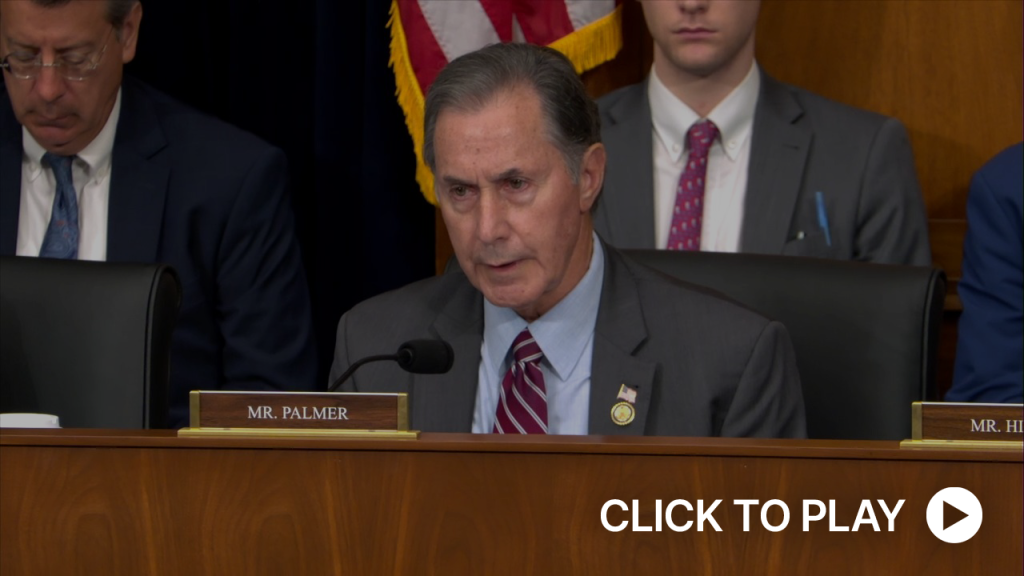
Rep. Palmer: “Mr. Conde, does it make sense when the United States has 583.9 trillion cubic feet of proved reserves of natural gas to be dependent on a foreign nation, an adversarial nation, for our energy supply?”
Mr. Conde: “No.”
Rep. Palmer: “Does the United States, in terms of its ability to produce power from solar or wind, are we capable of securing 100 percent of the supply chain necessary for building these facilities?”
Mr. Conde: “Not under current permitting laws.”
Rep. Palmer: “Who are we depended on for things like solar panels and electrical steel and things like that?”
Mr. Conde: “The People’s Republic of China.”
Rep. Palmer: “Does that concern you?”
Mr. Conde: “Absolutely it does. Yes, absolutely.”
Rep. Palmer: “I’m not against renewables. I just think when you’re closing hydrocarbon facilities at the scale we’ve been closing them, literally losing hundreds of gigawatts of power and trying to replace it with intermittent renewables, we’ve done tremendous harm to our ability to provide the power that we’re going to need when we need to increase the baseload power. Is that correct?”
Mr. Conde: “That’s correct.”
Rep. Palmer: “I thought so. Looking back over the last ten years, the prices of residential natural gas versus electricity, which has been more stable, generally lower, for American households?”
Mr. Conde: “Natural gas.”
Rep. Lauren Boebert (R-Colo.) inquired about transitioning buildings to run on electricity, the impact of natural gas bans on the electric grid, and how federal energy policies influence state and local energy policies related to building codes.
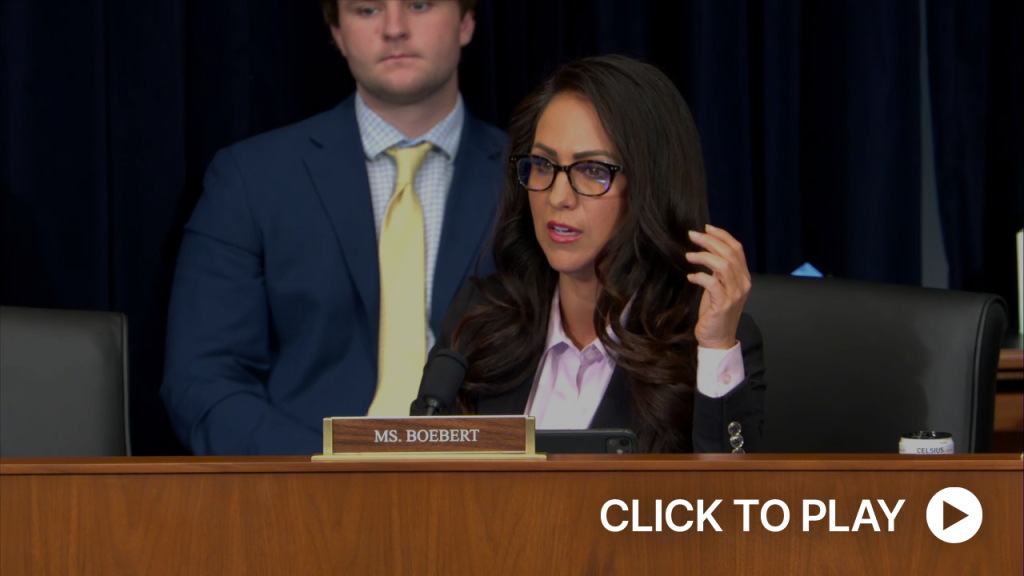
Rep. Boebert: “Mr. McCormick, kind of along the same lines, if buildings that are currently relying on natural gas for heating and other energy needs are converted to electricity, how does that change the demands placed on our electric grid?”
Mr. McCormick: “Well, it will dramatically increase the demand on the electric grid at the time, just at the time when load is also growing. And so, you’re going to stress these grids. The North American Electric Reliability Corporation, or NERC, has pointed out that the systems are already stressed and has expressed concern about the ability of the systems to maintain reliability.”
Rep. Boebert: “Yes. And I’ll ask this very quickly. Mr. Conde, we’re seeing cities across the country use building codes with zero emission requirements to restrict or effectively prohibit natural gas. How does federal law particularly prohibit this policy [and] apply when local government is using these same building codes?”
Mr. Conde: “Sure. So as the Ninth Circuit has said, these laws are illegal. The statute prohibits state and local laws concerning energy use. And it’s pretty difficult to say that banning energy use from gas appliances is not concerning energy use. So I think it’s a pretty straightforward argument. And I think we’ll hear soon from the Supreme Court on this.”
Click here to watch the hearing.
Legal Disclaimer:
EIN Presswire provides this news content "as is" without warranty of any kind. We do not accept any responsibility or liability for the accuracy, content, images, videos, licenses, completeness, legality, or reliability of the information contained in this article. If you have any complaints or copyright issues related to this article, kindly contact the author above.
